Cortex 2.0 Multi-Gripper-Generalisierung
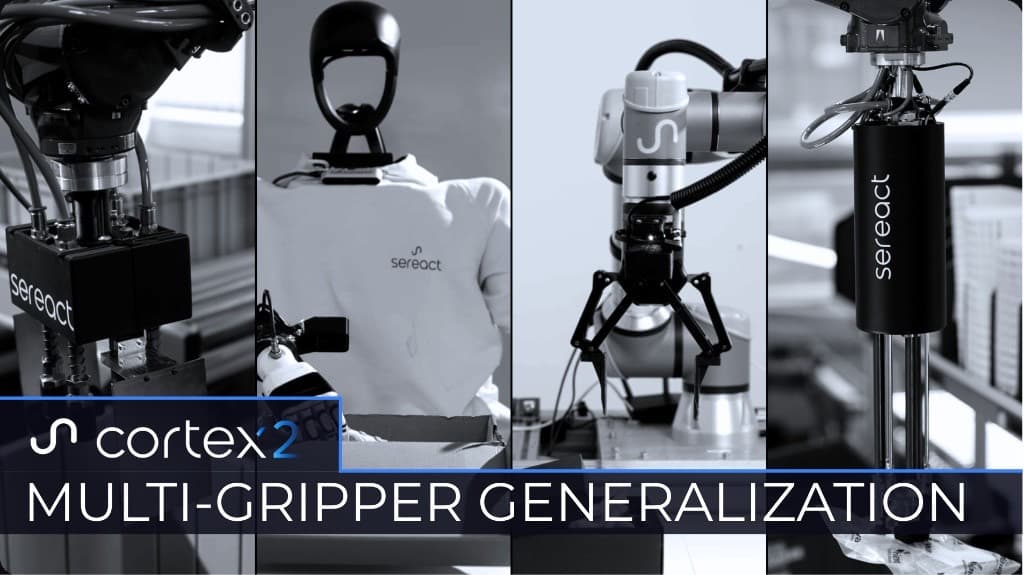
Full-Stack-Automatisierung heißt, die schwierigen Probleme durchgängig zu lösen. Die reale Welt liefert selten ein sauberes Problem mit einem Roboter und einem Greifer. Sie liefert ein Fashion-Fulfillment-Center mit Pickstationen an Einzelarmen, Retourenstationen, die für alles, was durch das Netzwerk zurückkommt, zwei Arme brauchen, und Humanoide, die auf der Fläche Wagen beladen. Ein Modell über all das laufen zu lassen, ist genau das, wofür Cortex von Anfang an gebaut wurde.
Für echte Generalisierung in der Robotik braucht Intelligenz die richtigen Werkzeuge zum Handeln. Die Branche feiert Hardware-Durchbrüche gern für sich allein. Wir sehen sie als Mittel zum Zweck. Ein Greifer allein ist keine Lösung, sondern eine Komponente. Die spannende Arbeit besteht darin, ihn in ein System zu integrieren, das tatsächlich leistet: Wahrnehmung, Planung, Fehlerbehebung, das Wissen, wann man sich festlegt und wann man korrigiert. Ohne ein Modell, das bereits weiß, wie es jedes vorgelegte Werkzeug benutzt, wird jede neue Hardware zu einem weiteren Integrationsprojekt, und der Nutzen besserer Fingerspitzen wird von den Kosten aufgefressen, dem Rest des Systems ihren Gebrauch beizubringen. Objektverteilungen stehen nicht still. Retourenstationen sehen Tausende SKUs, die niemand eingeplant hat. Das Modell im Produktivbetrieb muss über all das generalisieren: über Roboter, über Greifer, über den Long Tail des Katalogs.
Der Greifer ändert sich, das Modell nicht.
Wir haben kürzlich einen neuen Endeffektor für Schuhe integriert. Cortex hat ihn ohne Neutraining übernommen. Ein kleiner Datensatz teleoperierter Demonstrationen genügte, um die neuen Bewegungen zu verankern; der Rest des Modells blieb unverändert. Diese eine Integration hat die Artikel, die unsere Flotte zuverlässig handhabt, um eine Größenordnung erweitert und die gesamte Bandbreite an Fashion-Artikeln erschlossen.
Schuhkartons machen einen großen Anteil in den Lagern von Fashion-Kunden aus. Ein Humanoid, der auf der Fläche Wagen be- und entlädt. Eine Dual-Arm-Retourenstation, die Kartons handhabt, die auf dem Weg durch das Netzwerk bereits geöffnet, umgepackt und verformt wurden. Eine Einarm-Pickzelle mit einem Endeffektor, der speziell für Schuhkartons gebaut ist – schnell, robust und in der Lage, Tausende Einheiten pro Schicht ohne Aussetzer zu bewegen.
Wie Cortex 2.0 einen neuen Greifer übernimmt
Cortex 2.0 behandelt jeden Greifer als eigenständige Entität. Jeder Greifer hat ein eigenes gelerntes dynamisches Embedding in einer gemeinsamen Embedding-Tabelle, und dieses Embedding wird in das World Model, das Low-Level-VLM und die VLA-Action-Heads eingespeist. Da die Planung im visuellen Latent Space stattfindet und Pixel Regelmäßigkeiten über Objekte, Kontakt und Bewegung tragen, lässt sie sich über Embodiments hinweg übertragen – das Modell wird auf jeder Ebene, auf der diese Information zählt, darauf konditioniert, welche Hand es gerade trägt. Aus den verschiedenen Kandidaten-Zukünften, die das World Model ausrollt, bewertet PRO jede nach Fortschritt, Risiko und Stabilität. Alles konditioniert auf den aktiven Greifer.
Der Action-Decoder erzeugt die Steuerungsrepräsentation. Zwei schlanke Output-Heads darüber erzeugen den Armbefehl und den Endeffektor-Befehl.
Weil das Embedding und der größte Teil des Decoders über Module und Greifer hinweg geteilt werden, erfordert ein Hardwarewechsel kein Neutraining des Planers. Einen neuen Greifer zu integrieren bedeutet: eine Zeile zur Embedding-Tabelle hinzufügen, einen kleinen, gezielten Datensatz teleoperierter Demonstrationen zur Verankerung sammeln und den Greifer-Head das spezifische Verhalten des neuen Aktors lernen lassen. Alles andere kommt unverändert mit.
Der Shoebox-Greifer – unser Einarm-Endeffektor, von Grund auf für Schuhkartons gebaut.
Schuhkartons sind trügerisch schwierig. Sie sind steif genug, um einen entschlossenen Griff zu belohnen, und empfindlich genug, um einen falschen zu bestrafen. Sie stapeln sich dicht. Sie kommen in einem Dutzend Größen derselben Marke und in hundert Größen über einen Fashion-Katalog hinweg. Sie treffen mit losen Deckeln ein, mit eingedrückten Ecken, mit halb abgezogener Schrumpffolie.
Unser Schuhkarton-Greifer ist eigens für diese Kategorie gebaut. Die Geometrie ist auf den Standard-Grundflächenbereich von Schuhkartons abgestimmt, mit Nachgiebigkeit in den Kontaktflächen, um die Streuung aufzufangen. Er legt sich in einer einzigen Bewegung fest – kein Nachgreifen, kein Tasten.
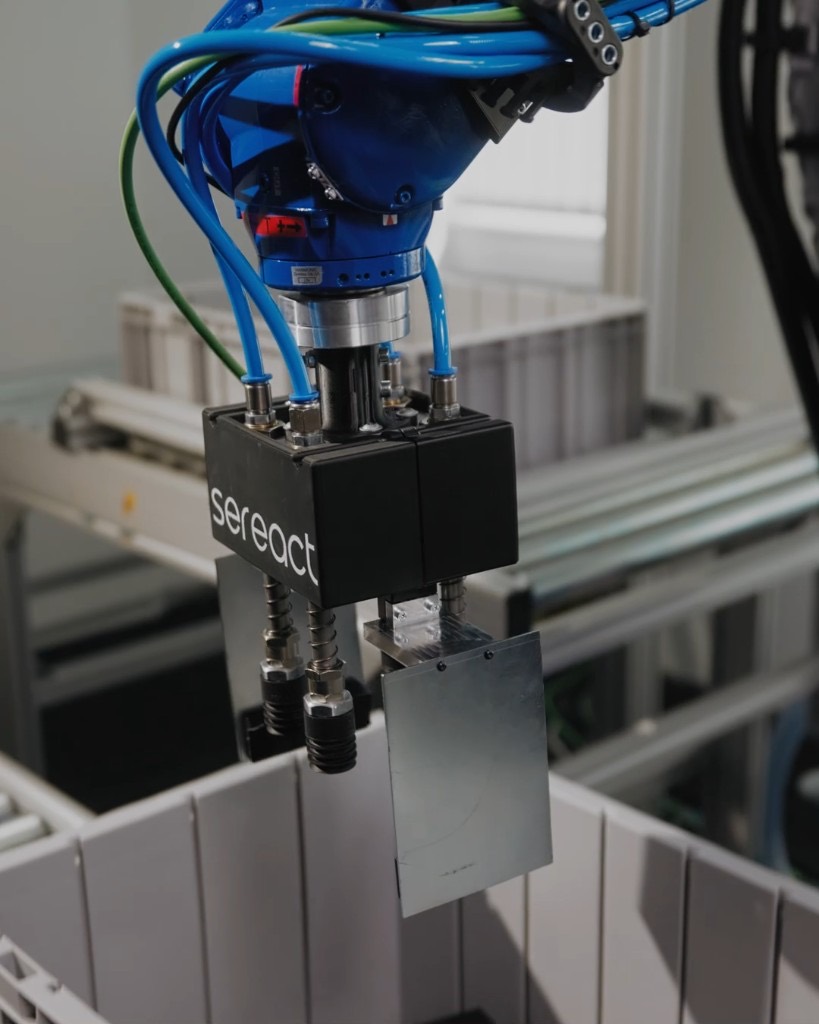
Wo der Schuhkarton-Greifer am stärksten ist:
- Pickzellen mit hohem Durchsatz und durchgehenden Schichten auf Spitzenrate, wo jede Sekunde Zykluszeit zählt.
- Outbound-Fulfillment für Schuhhändler – Platzierungsqualität und Ausrichtung sind für das nachgelagerte Packen entscheidend.
Cortex hat den Schuhkarton-Greifer so übernommen, wie es jede neue Hand übernimmt: ein kleiner Satz teleoperierter Demonstrationen, kein Neutraining des Planers, im Einsatz beim Kunden innerhalb weniger Wochen, nachdem die Hardware fertig war.
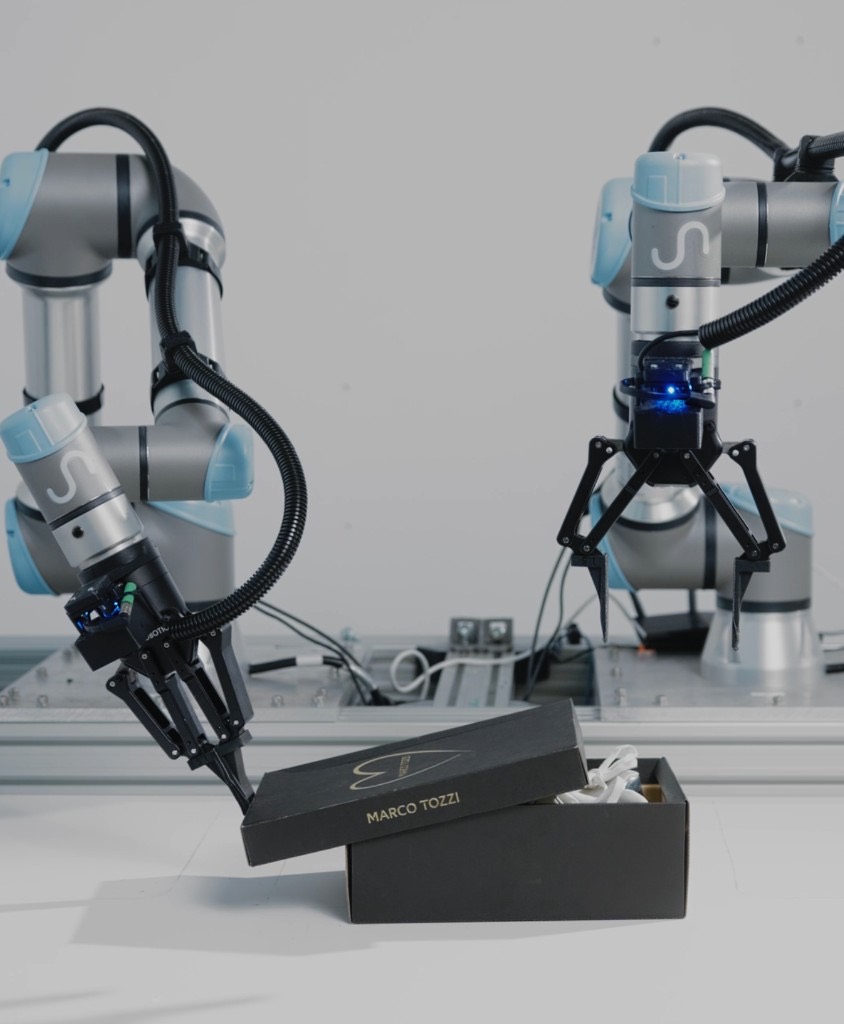
Zweifinger-Greifer
Der Zweifinger-Greifer ist das Arbeitspferd. Einfacher Mechanismus, robust, schnell, wartungsfreundlich. Zwei gegenüberliegende Backen, konfigurierbare Spitzengeometrie, ein Kraftbereich, der die meisten starren und halbstarren Artikel eines Fashion- oder E-Commerce-Katalogs abdeckt.
Wo er am stärksten ist:
- Retourenstation
- Kartonierte Ware in unterschiedlichen Größen
- Artikel, die einen entschlossenen Griff brauchen
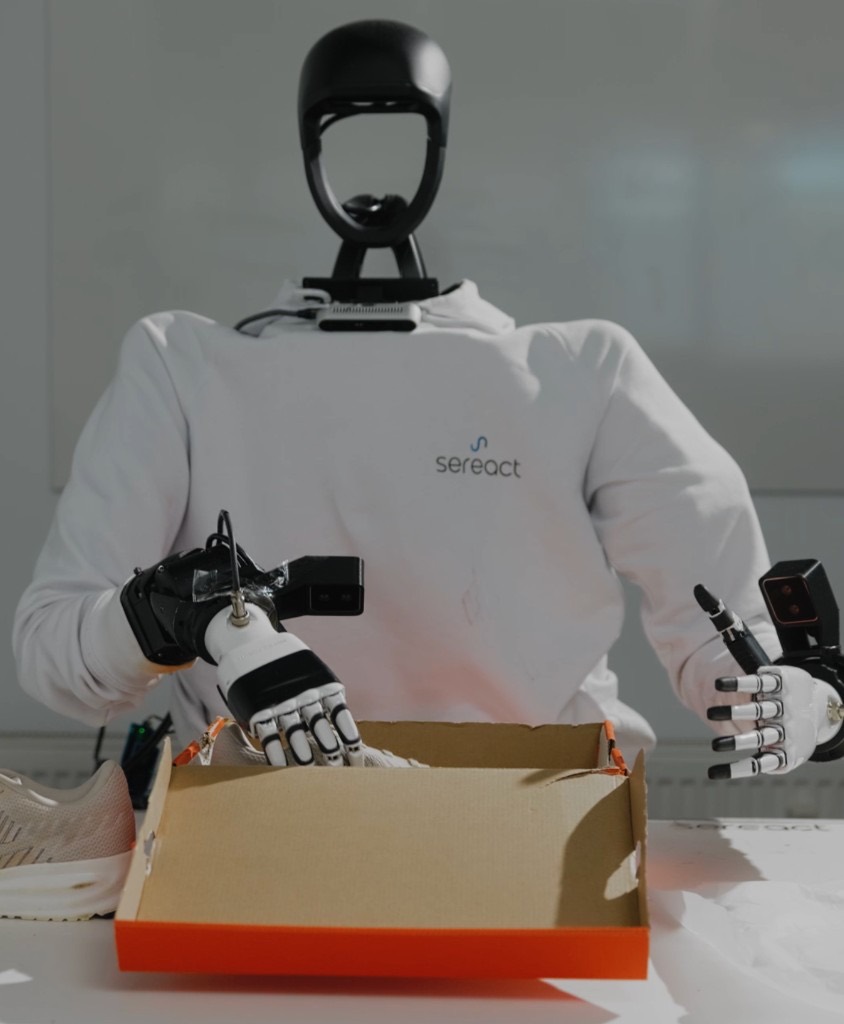
Humanoide Hand
Die humanoide Hand ist der allgemeinste Endeffektor, den wir betreiben, und der mit der höchsten Geschicklichkeitsobergrenze. Fünf Finger, ein opponierbarer Daumen, ein Arbeitsraum, der sich mit dem menschlichen überschneidet. Sie ist der Greifer der Wahl für Umgebungen, die um Menschen herum gestaltet sind: Verkaufsflächen, Lager mit Regalen in Menschenmaß, Retourenstationen, die alles verarbeiten müssen, was ein Kunde zurückgeschickt hat.
Wo er am stärksten ist:
- Be- und Entladen von Wagen und Behältern
- Handhabung gemischter Objekte
- Weiche und unregelmäßige Ware
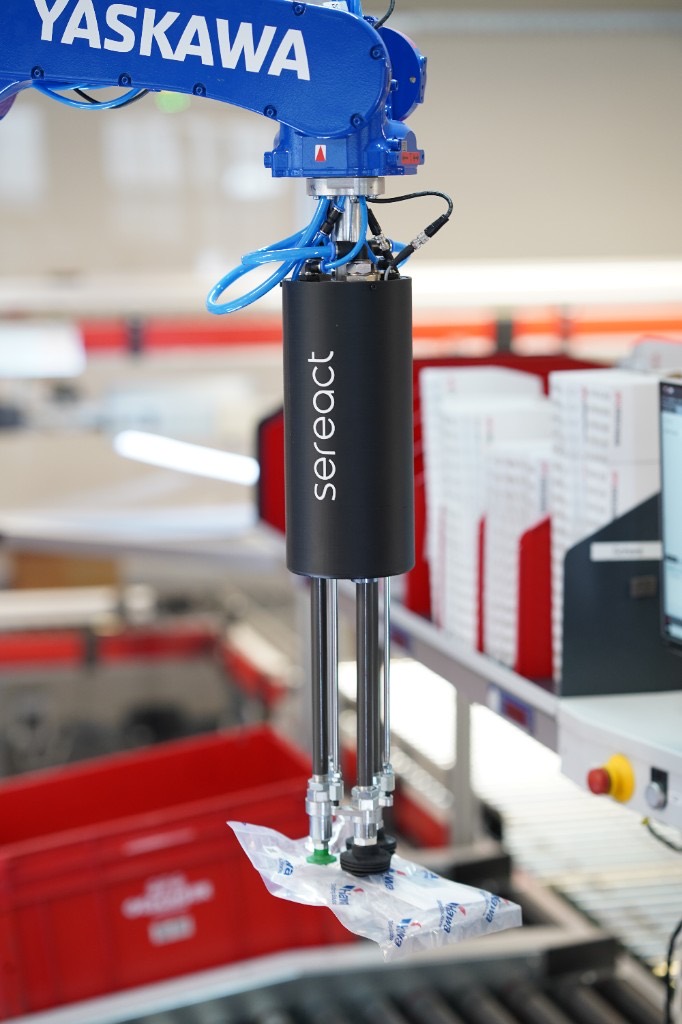
Sauggreifer
Saugen ist der schnellste Griff, den wir haben, wenn die Geometrie mitspielt: eine flache oder nahezu flache Oberfläche, eine saubere Abdichtung, ein einzelner vertikaler Pick. Cortex betreibt ihn wie alles andere – als eine Option unter mehreren, gewählt, wenn die Szene danach verlangt.
Wo er am stärksten ist:
- Picken von Polybeuteln
- Kartons und Schachteln mit flacher Oberseite
- Einarm-Zellen mit hohem Durchsatz
Über das Lager hinaus
Fashion-Fulfillment ist der unmittelbare Treiber. Schuhe, Bekleidung und Retouren sind Kategorien, in denen Schuhkarton-Handling, Textilmanipulation und hohe SKU-Vielfalt zum Alltag gehören und in denen die Stückkosten davon abhängen, Spitzendurchsatz zu erreichen, ohne bei der Platzierungsqualität nachzulassen. Dasselbe Cortex-Deployment, das bei einem Kunden Retouren fährt, kann in ein Fashion-Fulfillment-Center wechseln und in der Folgewoche Schuhkartons picken – auf Hardware, die einen Monat zuvor nicht im Trainingsdatensatz existierte.
Dieselbe Logik reicht weiter. Fertigungszellen brauchen unterschiedliche Endeffektoren für unterschiedliche Teile, und das Modell, das über sie hinweg läuft, muss wissen, wann und wie zu wechseln ist. Haushaltsumgebungen, die nächste Grenze für Physical AI, werden eine noch breitere Palette an Werkzeugen erfordern, denn keine einzelne Hand wird je die Vielfalt der Objekte in einem echten Zuhause abdecken. Die Robotikunternehmen, die in diesen Umgebungen gewinnen, werden jene sein, deren Modelle es nicht kümmert, welche Hand sie gerade tragen, und deren Hardware-Roadmap davon getrieben wird, was die Intelligenzschicht als Nächstes braucht – nicht umgekehrt.
Jeder neue Greifer, den wir integrieren, macht den nächsten schneller. Jeder gepickte Schuhkarton, auf welchem Roboter auch immer, macht den nächsten Pick auf jedem anderen Roboter zuverlässiger. Hardware ist die Infrastruktur. Intelligenz ist der Hebel. Wir haben ein System gebaut, in dem mehr vom Ersten den Wert des Zweiten potenziert – und wir liefern dieses System heute über mehr als 200 Deployments im Produktivbetrieb aus.
Ressourcen zum Artikel
Inhalte und Assets aus diesem Beitrag abrufen
Textinhalt
Kopieren Sie den vollständigen Artikeltext in die Zwischenablage, um ihn bequem zu lesen oder zu teilen.
Bildmaterial
Laden Sie alle in diesem Artikel verwendeten hochauflösenden Bilder als ZIP-Datei herunter.
Neueste Artikel