Der Real-World Learning Loop
Ein anderer Ausgangspunkt für robotische Intelligenz
Sereact arbeitet zugleich als Frontier-Forschungslabor und als produktionsreifes KI-Robotikunternehmen. Die vorherrschende Sicht in unserer Branche lautet, dass universelle robotische Intelligenz bei Modellen beginnen müsse: größere Netze, neue Architekturen oder immer ausgefeiltere Simulationen. Bei Sereact vertreten wir eine gegenläufige Auffassung: Universelle robotische Intelligenz muss aus dem laufenden Einsatz gelernt werden.
Entscheidend sind die Datenabdeckung realer Interaktionsregime und die Verteilungsübereinstimmung zwischen Training und Einsatz. Systeme, die unter physikalischen Randbedingungen wahrnehmen, schlussfolgern und handeln müssen, operieren in einer Welt aus Kontakt, Reibung, Unsicherheit und Long-Tail-Variation. Roboter müssen durch zahlreiche Interaktionen und Rückmeldungen aus genau den Umgebungen lernen, in denen sie eingesetzt werden.
Unser Ansatz ist, einen Real-World Learning Loop zu bauen. Statt Forschung und Einsatz zu trennen, wird das Lernen direkt vom Produktivbetrieb angetrieben. Jeder erfolgreiche Pick, jeder Fehlschlag und jede Korrektur wird zu einem reichhaltigen Trainingssignal.
Nach unserem Kenntnisstand ist dieser Ansatz im industriellen Maßstab außerhalb des autonomen Fahrens neuartig – und genau das macht Sereact kategoriedefinierend.
Die Datenlücke der Physical AI
Empirische Befunde aus der jüngeren Robotikforschung deuten darauf hin, dass die Leistung häufig stärker durch die Verfügbarkeit großmaßstäblicher realer Interaktionsdaten begrenzt wird als durch die Modellkapazität.
Manipulation wird von kontaktreicher Dynamik bestimmt – Kräften, Reibung, Nachgiebigkeit und flüchtigen Kontakten –, die nur teilweise beobachtbar und in den meisten alternativen Datenmodalitäten schlecht abgebildet ist. Egozentrisches und exozentrisches Video liefert semantischen und geometrischen Kontext, kodiert aber nicht die Kraft- und Tastsignale, die Stabilität der Manipulation, Fügegenauigkeit und Wiederherstellungsverhalten zugrunde liegen.
Synthetische Daten und Simulation können diese Interaktionen annähern, aber nur begrenzt. Sie stützen sich auf vereinfachte Kontaktmodelle und idealisierte Annahmen, die die domänenspezifische Struktur realer Umgebungen – Lager, Fertigungsstandorte, Einzelhandelsflächen – nicht erfassen. Diese Umgebungen weisen stark ungleichmäßige Verteilungen auf, geprägt von Branchenzwängen, menschlichen Arbeitsabläufen und Hardwareverschleiß, die sich synthetisch nur schwer reproduzieren lassen.
Folglich neigen Policies, die überwiegend auf synthetischen oder Offline-Daten trainiert wurden, dazu, sich auf idealisierte Interaktionsmuster zu überanpassen und unter realen Bedingungen abzufallen. Robuste Generalisierung erfordert daher großmaßstäbliche Exposition gegenüber realen Interaktionsdaten, die das Lernen in der tatsächlichen gemeinsamen Verteilung von Wahrnehmung, Handlung und physikalischer Reaktion im Einsatz verankert.
Generalisierung entsteht in der Robotik aus Erfahrung, nicht allein aus Abstraktion. Diese Erfahrung muss die tatsächlichen Verteilungen von Objekten, Umgebungen und Interaktionen im Produktivbetrieb widerspiegeln.
Der Real-World Learning Loop
Der Real-World Learning Loop operationalisiert das Prinzip, dass robuste robotische Intelligenz durch anhaltende reale Interaktion gelernt werden muss. Statt Datenerhebung und Einsatz zu entkoppeln, wird das Lernen unmittelbar von Robotern angetrieben, die in Kundenumgebungen produktive Arbeit leisten. Zu jedem Zeitpunkt ist eine große Roboterflotte über Standorte, Aufgaben und Bedingungen hinweg aktiv und erzeugt kontinuierliche Ströme von Interaktionsdaten als Nebenprodukt der Lösung realer Probleme.
Einen Real-World-Learning-Loop in Gang zu bringen, ist schwer. Die Skalierung von einer Handvoll Systemen auf 10, 20 und mehr muss erfolgen, während strenge Kunden-KPIs zu Verfügbarkeit, Durchsatz und Zuverlässigkeit eingehalten werden. Systeme mit zu schwacher Leistung werden schnell entfernt, und Kundenvertrauen ist schwer zu gewinnen; nur Systeme, die sofortigen, verlässlichen Nutzen liefern, dürfen skalieren.
Dieser Einsatzmaßstab ist entscheidend. Mit mehr als 100 physischen Systemen im Betrieb erfasst die Sereact-Flotte ein breites Spektrum realer Bedingungen: Objektvariabilität, Umgebungsunterschiede, Hardwaretoleranzen und betriebliche Randbedingungen. Die Daten umfassen nicht nur nominale Ausführungen, sondern auch Fehlschläge, Beinahe-Fehler und Wiederherstellungsverhalten – Ereignisse, die im Dauerbetrieb natürlich entstehen.
Während sich die Modelle verbessern, verinnerlichen Roboter reale Physik und Systemdynamik und schließen so den Lernkreis: Daten potenzieren sich, Fähigkeiten verbessern sich, und die Abdeckung des Interaktionsraums wächst. Generalisierung entsteht schrittweise aus dem kontinuierlichen realen Betrieb und bildet die Grundlage für die nachfolgende Lernarchitektur.
Architektur für kontinuierliches Lernen
Die folgende Lernarchitektur zeigt den Einsatz im Zentrum des Prozesses. Alle Roboter speisen reale Daten in ein einziges, zentrales Cortex ein, das laufend Policies aktualisiert, die über die Flotte hinweg neu ausgerollt werden.
In-situ-Ausführung der Policy
Die aktuelle Policy wird auf Robotern ausgeführt, die in realen Produktionsumgebungen im Einsatz sind. Die Ausführung unterliegt Anforderungen an Sicherheit, Latenz und Zuverlässigkeit und legt zugleich interne Signale offen, die für das nachgelagerte Lernen relevant sind. Statt den Einsatz als festen Endpunkt zu behandeln, gilt die Ausführung als primäre Quelle des Lernsignals.
Kontinuierliche Datenerfassung
Im Betrieb annotieren Roboter ihre Interaktionen automatisch, indem sie synchronisierte Sensorbeobachtungen, Roboterzustand, Aktionstrajektorien, Greifkraft-Feedback und Aufgabenergebnisse aufzeichnen – unter Erhalt der zeitlichen und kausalen Struktur und unter Abbildung der im Einsatz relevanten Verteilung.
Datenkuratierung und Lernen
Erfasste Daten werden nach Kriterien wie Neuheit, Unsicherheit, Fehlerereignissen und Verteilungsverschiebung gefiltert und priorisiert. Ausgewählte Stichproben aktualisieren Modellrepräsentationen und Policies und halten das Lernen in realer Interaktion verankert. So konzentriert sich das Lernen auf den Long Tail seltener und unsicherer Interaktionen und treibt echte Generalisierung.
Evaluierung und erneutes Ausrollen der Policy
Aktualisierte Modelle werden automatisch innerhalb einer kontinuierlichen Trainings-, Evaluierungs- und Deployment-Pipeline geprüft – mit Offline-Metriken und einsatzrelevanten Kriterien, einschließlich Robustheits- und Regressionstests. Policies, die vordefinierte Validierungsgates bestehen, werden anschließend automatisiert an die Flotte ausgerollt und schließen damit den Lernkreis.
Generalisierung wächst aus Erfahrung (als Nebenprodukt des Einsatzes)
Bei robotischer Manipulation können kleine Abweichungen in Geometrie, Kontaktbedingungen oder Timing zu qualitativ unterschiedlichen Ergebnissen führen, was Generalisierung von Natur aus schwierig macht. Der Dauerbetrieb in Produktionsumgebungen setzt das System dieser Variation im großen Maßstab aus.
Wie Abbildung 2 zeigt, führt eine größere Menge realer Interaktionsdaten zu einer systematischen Ausweitung der Aufgabenkompetenz. Bei begrenzten realen Daten gelingen Modellen nur ein schmaler Teil der Aufgaben, mit ungleichmäßiger und brüchiger Leistung. Sobald reale Daten zum dominierenden Trainingssignal werden, steigen die Erfolgsraten über Aufgaben hinweg konsistent an und erzeugen eine dichtere, gleichmäßigere Aufgaben-Leistungs-Landschaft. Diese Zugewinne treten erst bei höheren Realdaten-Anteilen auf, was darauf hindeutet, dass reale Interaktion übertragbare Struktur liefert und nicht bloß aufgabenspezifisches Feintuning.
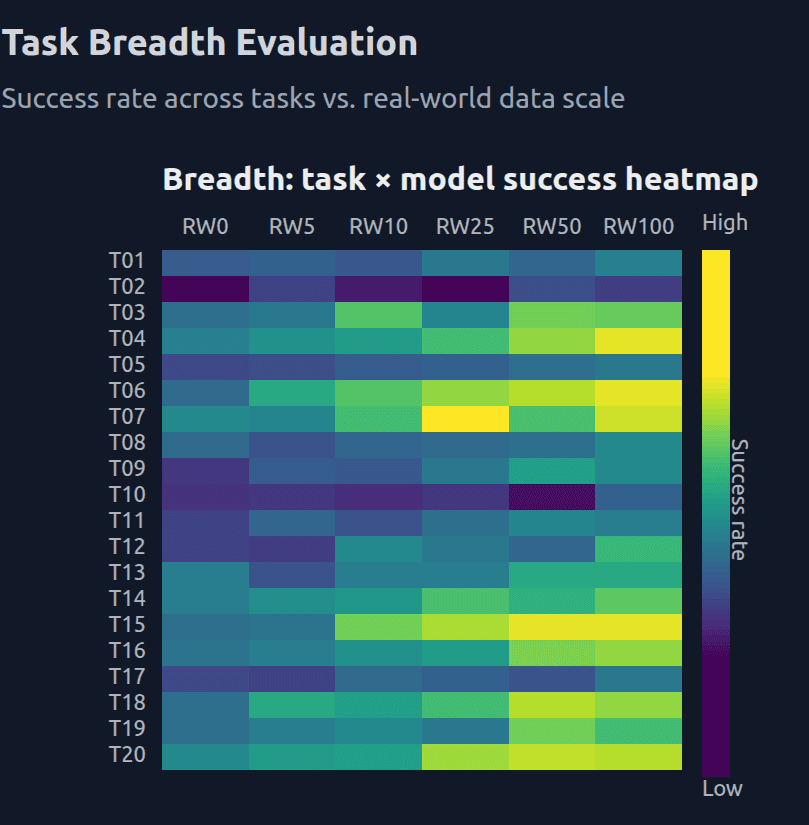
Abbildung 2. Der Umfang realer Daten treibt Aufgabenbreite und Generalisierung. Heatmap der Erfolgsraten über zurückgehaltene Manipulationsaufgaben als Funktion des wachsenden Umfangs realer Daten. Höhere Anteile realer Interaktionsdaten liefern breitere und konsistentere Aufgabenleistung und spiegeln verbesserte Generalisierung wider.
Über die Aufgabengeneralisierung hinaus ermöglichen reale Daten auch Transfer über Roboter-Embodiments hinweg. Policies, die auf realen Lager-Pick-and-Place-Daten trainiert wurden, generalisieren deutlich besser über unterschiedliche Robotermorphologien als Policies, die nur auf Simulationsdaten trainiert wurden. Reale Daten bringen für alle Plattformen konsistente Zugewinne. Dieser Transfer gelingt, weil reale Daten das Lernen in invarianten physikalischen Gesetzen und gemeinsamen Manipulationsprimitiven verankern und Interaktionsdynamik so über Bauformen hinweg generalisieren kann.
Mit steigender Leistung können Roboter in anspruchsvolleren Szenarien eingesetzt werden, was die Abdeckung des Interaktionsraums weiter ausdehnt. Daraus entsteht ein Verstärkungseffekt: Zusätzliche reale Daten verbessern nicht nur die bestehende Aufgabenleistung, sondern senken auch den Grenzaufwand, um neue Aufgaben und Embodiments zu unterstützen. In diesem Regime entsteht Generalisierung natürlich als Folge davon, im großen Maßstab in der realen Welt zu operieren und zu lernen – und nicht als explizites Optimierungsziel.
Abbildung 3. Reale Daten ermöglichen Generalisierung über Embodiments hinweg.
Normalisierte Generalisierungseffizienz über Roboter-Embodiments beim Training auf reinen Simulationsdaten gegenüber realen Lager-Pick-and-Place-Daten. Reales Training liefert für alle Embodiments deutlich höheren Transfer, während reines Simulationstraining durchgängig geringe Cross-Embodiment-Generalisierung zeigt.
Ein Daten- und Leistungsvorsprung, der nicht replizierbar ist
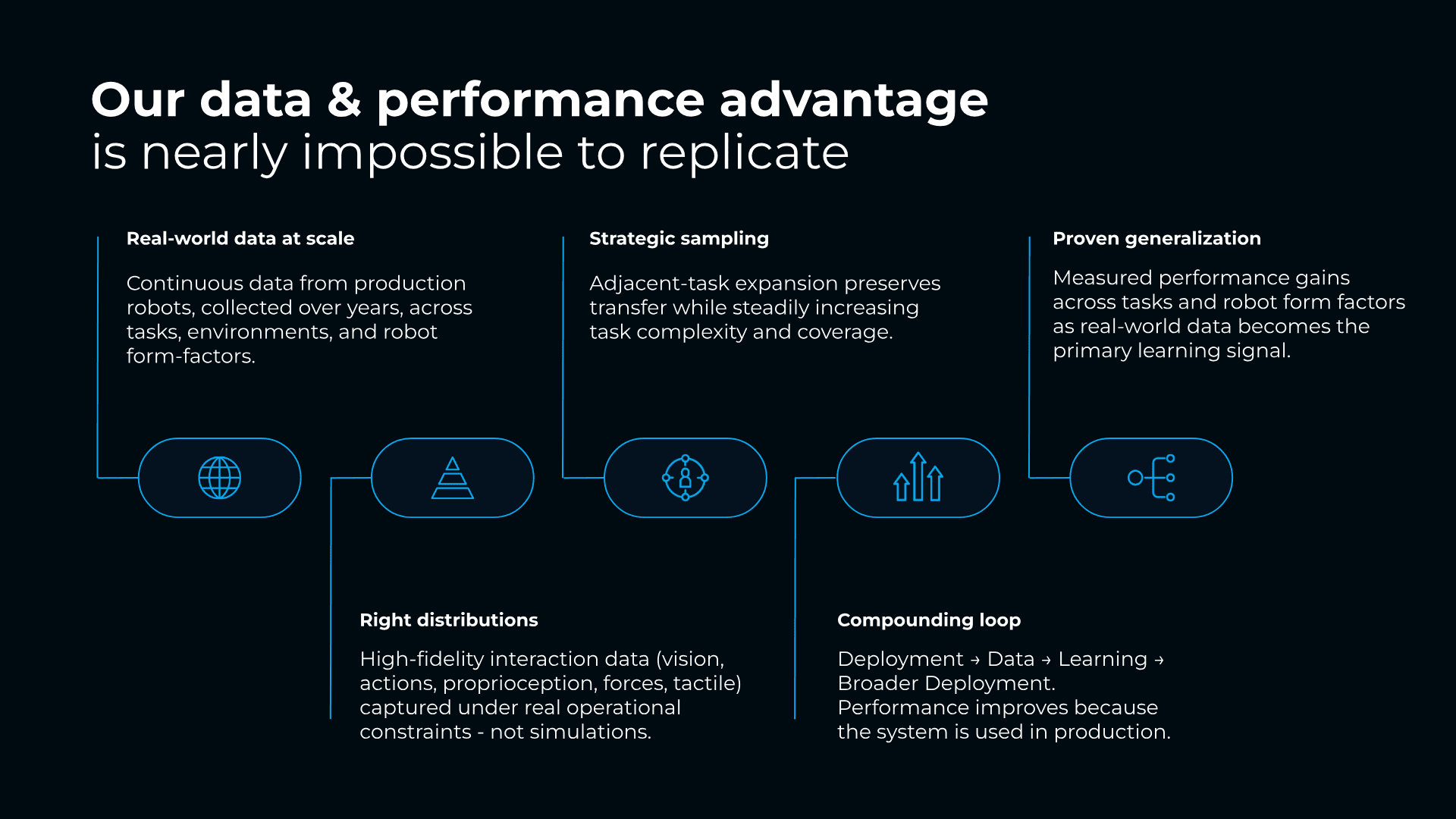
Sereact Cortex wird in der realen Welt gebaut, trainiert und eingesetzt, was einen sehr starken Daten- und Leistungsvorsprung schafft. Eine zentrale Folge dieses Ansatzes ist, dass Datenerfassung untrennbar mit Wertschöpfung verbunden ist. Statt sich auf Teleoperation oder inszenierte Datenerhebung zu stützen – Ansätze, die linear mit den Kosten skalieren und vom Kundennutzen abgekoppelt bleiben –, lernt Cortex durch anhaltende Ausführung im Produktivbetrieb.
Roboter erzeugen Daten, indem sie echte Arbeit leisten. Jede erfolgreiche Ausführung, jede Korrektur und jeder Fehlschlag geschieht in einem laufenden operativen Kontext und hat unmittelbare wirtschaftliche Relevanz. Mit wachsendem Einsatz sammelt das System nicht bloß mehr Daten; es gewinnt Daten, die zunehmend vielfältiger, verteilungsseitig ausgerichtet und repräsentativ für reale Randbedingungen sind. Edge Cases werden nicht konstruiert, sondern im Gebrauch natürlich angetroffen, und mit steigender Leistung werden Robotern komplexere Szenarien anvertraut, was das Lernsignal weiter ausweitet.
Ressourcen zum Artikel
Inhalte und Assets aus diesem Beitrag abrufen
Textinhalt
Kopieren Sie den vollständigen Artikeltext in die Zwischenablage, um ihn bequem zu lesen oder zu teilen.
Bildmaterial
Laden Sie alle in diesem Artikel verwendeten hochauflösenden Bilder als ZIP-Datei herunter.
Neueste Artikel