Wie Cortex im Feld lernt: Erkenntnisse aus der Retourenbearbeitung in der Praxis
Einleitung
Die weltweiten Retourenquoten im E-Commerce liegen im Schnitt bei 15–25 % der Bestellungen. In den europäischen Fashion-Märkten steigt der Wert auf 50 %. Bei US-Bekleidung sind es 60 %. Allein in den USA verarbeiten Händler jedes Jahr retournierte Ware im Wert von Hunderten Milliarden Dollar. Jeder dieser Artikel erfordert eine individuelle Handhabung: physische Prüfung, Zustandsbewertung und eine Verwertungsentscheidung, die unter Unsicherheit über Zustand, Vollständigkeit und Wiederverkaufspotenzial des Artikels getroffen wird.
Trotz dieser Größenordnung bleibt die Retourenabwicklung einer der am wenigsten automatisierten Prozesse in der modernen Lagerlogistik. Anders als im Wareneingang oder im Order-Fulfillment, wo Artikelzustände vorhersehbar und Aufgaben klar definiert sind, treffen Retouren in wechselndem Zustand ein, erfordern mehrstufige Prüfsequenzen und verlangen bedingte Entscheidungen, die sich mit jedem Artikel ändern. Diese Eigenschaften haben den Prozess gegenüber konventionellen Automatisierungsansätzen widerständig gemacht, und die meisten Standorte verlassen sich weiterhin fast vollständig auf manuelle Arbeit.
Bei hohem Durchsatz zeigen menschliche Prüfer eine erhebliche Beurteilerstreuung in der Zustandsbewertung: Was für die eine Arbeitskraft „wiederverkäuflich“ ist, ist für die nächste „aufzubereiten“, und über Schichten und Standorte hinweg nimmt die Konsistenz weiter ab. Doch die Uneinheitlichkeit der Arbeit ist ein nachgelagertes Problem. Das primäre ist struktureller Natur: Es gibt keine skalierbare, automatisierte Lösung für einen Prozess, der jedes Jahr Hunderte Millionen unterschiedlicher Artikel bewältigt. Genau diese Lücke soll die Retourenautomatisierung schließen.
15–25 %
E-Commerce-Retourenquote
~50 %
Fashion (EU Online)
~60 %
Bekleidung (US-Segmente)
Retouren automatisieren
Die Retourenabwicklung zählt seit jeher zu den arbeitsintensivsten Prozessen im Handel und zu den am wenigsten optimierten. Jeder Artikel erfordert eine individuelle Handhabung, physische Prüfung, Zustandsbewertung und eine Routing-Entscheidung. In der Menge nähern sich die Kosten pro Artikel häufig dem verbleibenden Wiederverkaufswert an oder übersteigen ihn sogar.
Deshalb haben viele Händler Retouren historisch als Abschreibung behandelt. Nicht, weil ihnen die Fähigkeit fehlte, retournierte Ware zu bewerten, sondern weil die Wirtschaftlichkeit den Aufwand nicht rechtfertigte. Artikel zu entsorgen war oft günstiger, als sie zu bearbeiten.
Dieser Ansatz ist nicht mehr tragfähig. Die Retourenvolumina sind so stark gewachsen, dass allein der eingehende Strom erhebliche Engpässe im Lagerbetrieb erzeugt. In ganz Europa und den USA widmen Logistikdienstleister inzwischen ganze Standorte ausschließlich der Retourenabwicklung.
Was Retouren der Automatisierung besonders widerständig macht, ist die Natur der Aufgabe selbst. Anders als bei klassischen Pick-and-Place-Vorgängen, bei denen ein bekannter Artikel von einem definierten Ort an einen anderen bewegt wird, ist die Retourenabwicklung ein mehrstufiger Entscheidungsprozess unter fortwährender Unsicherheit. Jeder Artikel ist anders, und die Zustände variieren. Verpackungen sind beschädigt, fehlen oder führen in die Irre. Die richtige Handlung in jedem Schritt hängt davon ab, was in den Schritten davor gelernt wurde.
Keine einzelne Teilaufgabe ist der Engpass. Die Herausforderung besteht darin, die gesamte Sequenz zuverlässig und schnell über einen unvorhersehbaren Artikelstrom hinweg zu beherrschen.
Geringere Kosten
Die Handhabungskosten pro Artikel sinken, wodurch eine detaillierte Prüfung wieder wirtschaftlich wird
Konsistenz
Dieselben Kriterien für jeden Artikel, in jeder Schicht, an jedem Standort
Sicherheit
Reduziert den Kontakt von Menschen mit scharfen, kontaminierten oder unbekannten Gegenständen
Werterhalt
Artikel, die sonst entsorgt würden, können auf Wiederverkauf oder Recycling geprüft werden
Ein Blick in den Retourenprozess
Von dem Moment an, in dem ein Kunde einen Artikel zurückschickt, bis zu dem Punkt, an dem er wieder eingelagert, aufbereitet oder entsorgt wird, durchläuft der Artikel eine Folge eng verzahnter Schritte. Jeder bringt seine eigene Komplexität mit, und jeder hängt von den zuvor getroffenen Entscheidungen ab.
In jeder Phase führt der Roboter nicht nur aus, er entscheidet. Wieder einlagern, aufbereiten oder entsorgen? Ist dieser Artikel tatsächlich unbenutzt oder nur geschickt neu verpackt? Sollte er einen anderen Blickwinkel versuchen, bevor er sich auf eine Bewertung festlegt?
Das sind sequenzielle Entscheidungen unter Unsicherheit, und sie richtig zu treffen wirkt sich unmittelbar auf das Ergebnis aus.
Gebaut für kontaktreiche Manipulation
Die Retourenabwicklung verlangt eine Art von Manipulation, die Einarmsysteme schlicht nicht leisten können. Pakete öffnen, Kleidungsstücke entfalten und Artikel prüfen erfordert jeweils beide Arme im Zusammenspiel. Diese Aufgaben lassen sich nicht in aufeinanderfolgende Einarmschritte zerlegen, ohne entweder Vorrichtungen zu ergänzen oder den Prozess grundlegend umzugestalten.
Genau das unterscheidet die Retourenabwicklung von klassischer Pick-and-Place-Automatisierung, bei der ein einzelner Endeffektor mit vorhersehbaren, geometrisch klar bestimmten Objekten arbeitet. Retouren bringen verformbare Materialien, unbekannte Objektzustände und kontaktreiche Manipulationssequenzen mit sich, die eine kontinuierliche, auf zwei Arme verteilte Kraft benötigen.
Manipulationsfähigkeiten, die in einfacheren Umgebungen entwickelt wurden, lassen sich als wiederverwendbare Bausteine in komplexere beidarmige Aufgaben übertragen: Griffstabilität, kontaktbewusste Bahnplanung und dynamisches Objekttracking gehen allesamt über. Mit wachsender Aufgabenkomplexität stapeln sich die gelernten Fähigkeiten, statt dass das System von vorn beginnen müsste.
Übergaben & Koordination
Ein Arm entnimmt den Artikel aus dem Behälter, während der andere die umliegenden Objekte stabilisiert. Ein Arm hält einen Artikel in Position, während der andere ihn prüft, scannt oder neu ausrichtet. Koordinierte Übergaben zwischen den Greifern ermöglichen flüssige mehrstufige Abläufe.
Neuausrichtung
Retournierte Artikel treffen selten in einer günstigen Lage ein. Zwei Arme können Objekte wenden, kippen und drehen, um verdeckte Etiketten freizulegen, Unterseiten zu prüfen oder Artikel zum Scannen zu positionieren.
Beutel & verformbare Materialien
Polybeutel, Seidenpapier, flexible Verpackungen: Verformbare Materialien sind in Retouren allgegenwärtig. Ein Arm hält den Beutel gespannt, während der andere den Artikel entnimmt oder einlegt. Einarmsysteme tun sich schwer mit Materialien, die bei Kontakt ihre Form verändern.
Natürlicher Fähigkeitsaufbau
Wissen aus dem Einarm-Pick-and-Place überträgt sich direkt: Griffplanung, Objekterkennung und Bewegungssteuerung gehen allesamt über. Der Dual-Arm-Ansatz erweitert diese Grundlagen um koordinierte Manipulation.
Visuelle Intelligenz für die Zustandsklassifizierung
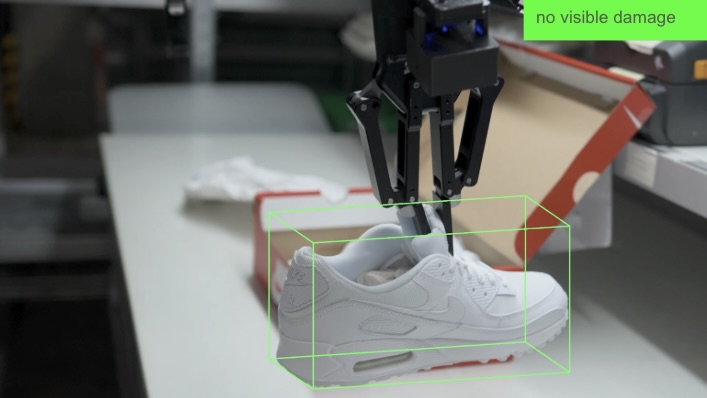
Das Lens-System ist unsere Ebene für visuelle Intelligenz, zugeschnitten auf die Prüf- und Klassifizierungsanforderungen der Retourenabwicklung. Während Cortex steuert, was der Roboter tut, bestimmt Lens, was der Roboter über jeden Artikel weiß: seinen Zustand, seine Kategorie und was als Nächstes mit ihm geschehen soll.
Manipulationsfähigkeiten, die in einfacheren Umgebungen entwickelt wurden, lassen sich als wiederverwendbare Bausteine in komplexere beidarmige Aufgaben übertragen: Griffstabilität, kontaktbewusste Bahnplanung und dynamisches Objekttracking gehen allesamt über. Mit wachsender Aufgabenkomplexität stapeln sich die gelernten Fähigkeiten, statt dass das System von vorn beginnen müsste.
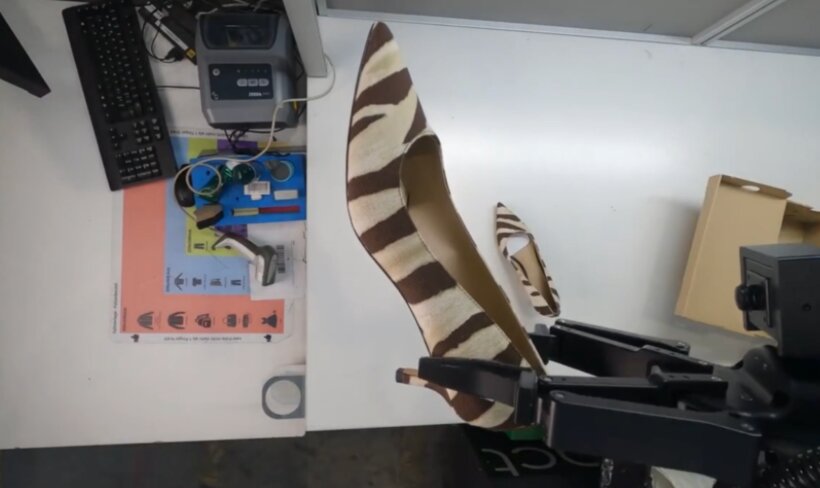
Entscheidend ist: Lens arbeitet nicht isoliert. Es greift direkt mit den Manipulations-Policies von Cortex ineinander. Bleibt eine visuelle Prüfung ergebnislos, weil ein Etikett teilweise verdeckt ist oder ein Artikel so gefaltet liegt, dass ein Defekt verborgen bleibt, kann Cortex den Artikel aktiv umpositionieren, um Lens eine bessere Sicht zu verschaffen. Der Roboter betrachtet nicht nur, was vor ihm liegt; er verändert die Szene, um die benötigten Informationen zu gewinnen.
Erfassung
Ansichten aus mehreren Winkeln
Lens-Analyse
Zustandsableitung
Klassifizierung
Bewertung & Konfidenz
Routing
Einlagern / Aufbereiten / Entsorgen
Diese enge Kopplung von Wahrnehmung und Handlung macht das System aus. Lens verwandelt das, was der Roboter sieht, in eine Entscheidung, und Cortex verwandelt diese Entscheidung in physische Ausführung.
Warum Cortex 2.0 dafür gebaut ist
Die Retourenabwicklung ist genau die Art von Problem, für die Cortex 2.0 gut geeignet ist: langer Horizont, hohe Unsicherheit und tief verwoben mit realer Variation, die keine kontrollierte Umgebung vollständig nachbilden kann.
Proaktive Planung
Cortex wartet nicht, bis etwas schiefgeht. Sein World Model antizipiert Ergebnisse, weil es gelernt hat, dass bestimmte Griffe an verformten Kartons eher scheitern und dass eine Neuausrichtung vor der Prüfung zu besseren Ergebnissen führt. Es plant voraus, statt im Nachhinein zu reagieren.
Lernt aus dem Produktivbetrieb
Jede Retoure, die in einem laufenden Lager bearbeitet wird, bringt dem System etwas Neues bei. Beschädigte Verpackungen, ungewöhnliche Artikel, Sonderfälle, die kaum zu simulieren wären, entstehen im Maßstab ganz von selbst. Cortex macht aus diesen Betriebsdaten bessere Policies.
Lernen über die gesamte Trajektorie
Statt nur aus Erfolg oder Misserfolg zu lernen, gewinnt Cortex aus jedem Schritt ein Signal: Teilfortschritte, Beinahe-Fehlgriffe, instabile Zustände, Korrekturen. Bei Retourenaufgaben mit langem Horizont macht das das Lernen dramatisch effizienter.
Produktivbetrieb
Retourenabwicklung im Live-Betrieb
Daten
Vollständige Trajektorien
World Model
Lernen & Imaginieren
Verbesserte Policy
Klügere Entscheidungen
Das Ergebnis ist ein System, das sich mit jeder Schicht verbessert und aus der vollen Komplexität realer Retouren lernt statt aus vereinfachten Laboraufbauten oder handgeschriebenen Regeln.
Was Cortex als Nächstes erschließt
Die Retourenabwicklung steht für eine Klasse von Manipulation, bei der der Erfolg vom Schlussfolgern über längere Sequenzen abhängt. Objekte treffen in unvorhersehbarem Zustand ein und erfordern Prüfung, physische Interaktion und bedingte Entscheidungen im Verlauf der Ausführung.
Sie gut zu lösen legt das Fundament für komplexere Domänen wie Kitting, Montage und Fertigung, in denen Umgebungsvielfalt und physische Randbedingungen zunehmen, der Bedarf an anhaltendem Schlussfolgern aber derselbe bleibt.
Die Retourenabwicklung markiert einen kritischen Übergang: von Robotern, die in Einzelschritt-Aufgaben glänzen, zu Systemen, die Prozesse verstehen und steuern. Cortex 2.0 ist genau für diesen Wandel ausgelegt.
Pick & Place
Einzelschritt-Aufgaben
Retourenabwicklung
Mehrstufiges Schlussfolgern
Kitting & Montage
Restriktive Sequenzen
Fertigung
Komplexe Interaktionen
Haushalt & Gesundheitswesen
Autonomie in offener Welt
Darum geht es
Die Retourenquoten im E-Commerce liegen im allgemeinen Handel im Schnitt bei 15–25 % und erreichen in der Fashion bis zu 60 %. Das Volumen retournierter Ware übersteigt inzwischen das, was manuelle Bearbeitung zu vertretbaren Stückkosten aufnehmen kann.
Cortex 2.0 setzt genau hier an. Die Retourenabwicklung ist ein Entscheidungsprozess mit langem Horizont, in dem jeder Schritt vom Ergebnis des vorherigen abhängt und der Artikelzustand bis zur physischen Prüfung unbekannt bleibt. Cortex 2.0 denkt mögliche Zukünfte durch und passt sich in jedem Schritt an das an, was es beobachtet. Die Zustandsbewertung der Artikel über Lens speist strukturierte Klassifizierungssignale direkt in die Routing-Entscheidungen ein, mit aktiver Neuausrichtung, wenn die Ansichten nicht eindeutig sind.
Wichtig ist: Das System verbessert sich mit dem Einsatz. Jeder Artikel, den es bearbeitet, ist ein echtes Trainingssignal aus realen Lagerretouren, nicht aus einer simulierten Umgebung. Die Leistung steigt kontinuierlich, ohne dass jemand Regeln aktualisieren oder Retraining-Zyklen anstoßen müsste.
Ressourcen zum Artikel
Inhalte und Assets aus diesem Beitrag abrufen
Textinhalt
Kopieren Sie den vollständigen Artikeltext in die Zwischenablage, um ihn bequem zu lesen oder zu teilen.
Bildmaterial
Laden Sie alle in diesem Artikel verwendeten hochauflösenden Bilder als ZIP-Datei herunter.
Neueste Artikel